We catch missed breaks, unpaid break premiums, and open heat items on production and cellar crews — then chase each one to a documented fix.
MicroForensics™ is built for California wineries and food plants, where harvest lengthens shifts but a meal break must start before the fifth hour of work ends (Labor Code §512). A missed or short break is caught the pay period it happens and chased to a documented fix — and when a lawyer's letter demanding records arrives, your custodian of records, the person on your team authorized to produce them, answers it from one place. No app for your crews to learn.
Free · 30 minutes · by phone or video. We tell you whether the records diagnostic, a fixed-fee review of your timecard, break and safety records, is worth doing for you, and what it costs. If it is not, we say so.
What MicroForensics is
MicroForensics reads the payroll and time clocks you already run, and Floburn operates the loop every pay period.
MicroForensics ingests your hourly timecard data, payroll, and related HR documents to flag missed breaks, unpaid break premiums, wage order errors, and open safety items, then chases each one to a documented fix. It is built to work with the existing payroll and timekeeping you already run, and Floburn runs it for you every pay period.
What it does
Five things, every pay period.
- Workers confirm and attest to the accuracy of their hours and breaks, among other labor compliance attestations, via existing tools you have in place that we configure or via custom interfaces we build for you. No one's pay ever depends on it.
- Written rules flag exceptions, such as a missed meal period, a missing rest break, or hours past a limit you set.
- Every flag is answered on the record. The correction is entered next to the original entry.
- When a worker misses breaks repeatedly, they and/or their managers get routed to training.
- Everything goes into one dated record that your designated custodian of records can export to answer a lawyer's letter demanding records from one place.
Three reasons a winery or food plant's break record comes up short when a lawyer asks for it.
- 01
The fifth hour arrives on schedule.
Donohue v. AMN Services (Cal. 2021) holds that time records showing missed, short, or late meal periods raise a rebuttable presumption of violation. Fixed production shifts make the fifth hour predictable; crush adds second shifts and six-day weeks.
- 02
The wall clock records punches, not the meal.
The clock shows in and out, not whether the 30-minute meal was taken, duty-free and on time.
- 03
Heat reached the cellar in 2024.
Cal/OSHA's indoor heat standard (8 CCR §3396) reaches production floors, cellars, and un-air-conditioned warehouse space; §3395 covers outdoor harvest crews. Each requires a written plan and training; the injury and illness prevention program (8 CCR 3203(b)) requires the training and each hazard's correction to be recorded. The half that goes missing is the correction.
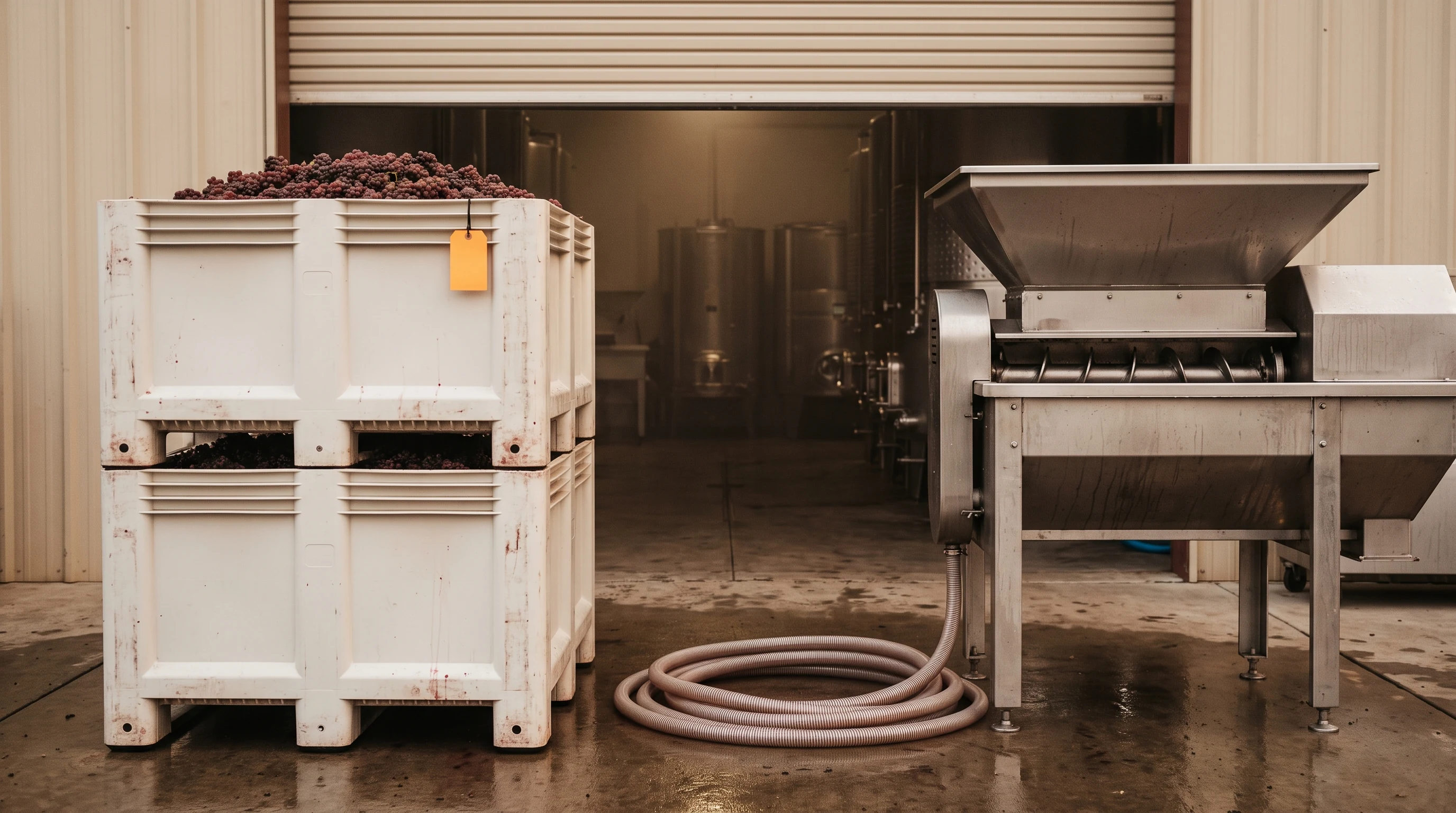
What we build on, and what we add.
- Timekeeping & payroll
Wall clocks & payroll bureaus
Badge and PIN punch clocks on the production floor, and the payroll bureau — ADP, Paychex, Gusto, or a regional service — that processes the file. We read the punch data as-is and change nothing at the clock; crews keep clocking the way they do today.
- Production & cellar
Work orders & batch records
InnoVint or Vintrace in the cellar — work orders, tank moves, lot histories, TTB filings — and batch and sanitation records on a food or beverage line. These systems prove what the crew did. We leave them alone and add the record the wage question needs: the employee's per-pay-period sign-off that breaks happened and hours are right.
- Compliance records
Heat records & the sign-off flow
Heat plan, training and hazard-correction records, and the meal- and rest-break sign-off itself — timestamped, in English or, where the crew needs it, Spanish.
We build the connector for your stack — by API where one exists, by export, SFTP, or structured manual entry where one doesn’t — scoped and priced in the records diagnostic.
Harvest adds a second set of records the law requires, on the same per-period sign-off: Piece-rate picking triggers Labor Code §226.2 — rest and recovery time paid separately.
One production package — the export that answers the letter. Hours, not weeks.
A lawyer’s letter demanding records usually arrives before any lawsuit does, and a §2699 PAGA notice after it. When the letter lands, the authorized custodian of records on your team — not Floburn — produces one production package in hours, not weeks. Payroll, timekeeping, HR, and safety are reconciled into one record every pay period, so production is an export from one place rather than a search across several.
- 01The export runs in under a minute.Retrieval from one record, not assembly across systems.
- 02Your custodian of records reviews and validates it.
- 03Your lawyer, an owner, or both review it, if you want them to.
- 04Your side sends it to the lawyer who asked.
The hours in “hours, not weeks” are steps 02 and 03: people you choose, reading it before it goes out. Floburn never reviews, validates, sends, or holds it.
The package exists before the letter does — the timeline is a property of how the record is kept, not a promise about your matter. No outcome is guaranteed; every matter turns on its facts.
What goes in the package, and how it is produced→Why it matters to a California employer
The window for the 15% PAGA cap closes when an employee or their lawyer asks for records, not when the lawsuit does.
The Private Attorneys General Act (Labor Code §2698 et seq.) lets an aggrieved employee — one who personally suffered each of the violations alleged (§2699(c)(1)) — sue for civil penalties on behalf of themselves and other current or former employees affected by the same violations. Penalties run per aggrieved employee, per pay period:
- $100 by default (§2699(f)(2)(A)). These penalties are separate from any wages and premiums owed.
Under the 2024 reform (AB 2288 and SB 92), Labor Code §2699(g) caps those civil penalties at 15 percent where the employer took all reasonable steps before the PAGA notice, or before a records request under §226, §432 or §1198.5, which usually comes first; §2699(h) caps them at 30 percent for remediation within 60 days after the PAGA notice. A court judges whether your steps were reasonable, looking at all the circumstances, including your size and resources. A court may also go above either cap if keeping to it would be unjust, arbitrary and oppressive, or confiscatory (§2699(e)(2)). No outcome is guaranteed; every matter turns on its facts.
The law rewards finding and fixing violations early, and being able to prove you did. The statute names four examples of reasonable steps (§2699(g)(2)):
- periodic payroll audits with action taken in response
- lawful written policies
- supervisor training on Labor Code and wage order compliance
- corrective action as to supervisors
MicroForensics keeps a dated, exportable record of all four. The audit, policy and training records speak to the cap. Worker sign-offs speak to whether breaks were taken.
How we work with you
A free call, a records diagnostic, and then only what you choose.
The call is free. The records diagnostic is a fixed fee, quoted on the call, and its report is yours whatever you decide next. Every paid step after it is written down in a document you sign before it starts.
- 01
Free 30-minute call, by phone or video
The screening pass: one question per exposure area, with you and whoever runs payroll. No records, nothing to prepare. If the records diagnostic is not worth doing for you, we say so.
- 02
Records diagnostic, a fixed fee, quoted on the call
A half- or full-day working session with your records open. Within fourteen calendar days of the working session, a written report: what your records show, item by item; a roadmap sorted into what you can fix yourself, what needs a process change and what needs a lawyer; and a practice records request answered from your own records. We walk you through it, directly or through your lawyer.
- 03
Implementation, only if you choose it, a separate agreement, signed and priced then
Two to four weeks to go-live, on the payroll and timekeeping you already run.
- 04
Ongoing service, every pay period
Floburn runs it: a weekly digest, a monthly report and a quarterly review. Billed monthly per active worker, on an annual term.
- 05
If you leave, at any time
Your record goes with you in a closing export, as structured files your lawyer or a successor vendor can use without us. It is yours throughout, and never held back over money.
Could you find these records today?
- Two weeks of time records exactly as the system exports them, unrounded if the system can do it
- One pay stub for someone who worked a normal week
- Whatever serves as the employee handbook, even if it is three years old
- The written heat illness plan and the injury and illness prevention program, whatever state they are in
Anything you cannot find is itself a finding.
Winery and food plant questions, answered.
01Can we be live before crush? Our production headcount surges at harvest.
Implementation runs two to four weeks from records diagnostic to go-live, depending on how many systems we're connecting — a spring or early-summer start clears the calendar comfortably. Seasonal ramp is what the cadence is built for: Every new production, cellar, or warehouse hire enters the attestation flow on their first pay period. If crush is already underway, the record starts at the current period — it is contemporaneous by design, and earlier periods cannot be attested after the fact.
02We log everything in InnoVint (or Vintrace) — work orders, tank moves, additions. Doesn't that show compliance?
It shows production, not wage-and-hour compliance. We add the wage-and-hour record: each employee's own contemporaneous sign-off that meal and rest breaks were taken and hours are right, with the exception noted and the premium paid where they weren't. No California court has yet held that an employee attestation rebuts the presumption raised by time records showing missed, short, or late meal periods, and we don't claim otherwise. The caps, and what a court decides, are set out above.
03Our harvest crews come through an FLC. Whose record is that?
The record follows the W-2. The employees on your own W-2 — production, cellar, bottling, and warehouse crews — attest every pay period. Workers supplied by a farm labor contractor or temp agency are on that contractor's payroll, and their attestation record belongs to the employer who issues their W-2. The records diagnostic maps which populations are yours, so coverage matches the workforce you actually employ.
04We're on a wall clock and a payroll bureau — no HR department. Can you even integrate with that?
Yes — that is the typical setup here; how the connector is built is set out above. Crews without smartphones attest on paper or over SMS. The office manager or controller reviews the exceptions, so no HR department is needed.
05We already have a lawyer’s letter or a PAGA notice. Can we still start?
Yes. Call your lawyer first: What the letter or notice means for you, and what to do about it, is for them to decide. Then book a free 30-minute call, and bring them if you like; tell us the date it arrived. With a matter open, your lawyer decides whether the records diagnostic runs through them or directly with Floburn, where its findings are discoverable. The sooner the record starts, the more pay periods it covers.
Free 30-minute call.
Tell us what you run and what prompted the call. The records diagnostic can run directly with Floburn or through your lawyer.
Free · 30 minutes · by phone or video. We tell you whether the records diagnostic, a fixed-fee review of your timecard, break and safety records, is worth doing for you, and what it costs. If it is not, we say so.
Floburn Inc. is not a law firm and does not provide legal advice. Counsel advises Floburn on system design and does not represent your company; retain your own counsel for advice specific to your situation.