We catch missed breaks, unpaid break premiums, and open safety items — then chase each one to a documented fix.
We build the wage-and-hour record California already requires on top of the timekeeping and payroll you use today, then operate it every pay period. A missed or short break is caught the pay period it happens and chased to a documented fix — and when a lawyer’s letter demanding records arrives, your custodian of records, the person on your team authorized to produce them, answers it from one place.
Free · 30 minutes · by phone or video. We tell you whether the records diagnostic, a fixed-fee review of your timecard, break and safety records, is worth doing for you, and what it costs. If it is not, we say so.
Already holding a lawyer’s letter demanding records, or a PAGA notice (the letter that starts a penalty claim)? Call your lawyer first, then book with us, and bring them to the call if you like.
What we defend against
- Missed meal and rest breaks, premium not paid (§226.7)
- The break that never got taken (§512)
- Unpaid or miscalculated overtime (§510)
- Time records that cannot be produced (§1174(d))
- Final pay that came late (§203)
§226 wage-statement defects and §2802 reimbursement are pled alongside these. We make no defense claim there.

Built for your industry: Fifteen California industries. Find yours.
Each page shows how the record works for your crews, on the payroll and time clocks you already run.

Construction & specialty trades
Water, shade, and cool-down rest under §3395 — the written plan behind them, and the training documentation, are records California already compels.
open heat-plan items on California jobsites

Wine & food/beverage manufacturing
The cellar records the harvest to the lot and the tank move; whether the fifth-hour meal actually happened, duty-free and on time, is the record a six-day crush week doesn't keep.
open heat items on production and cellar crews
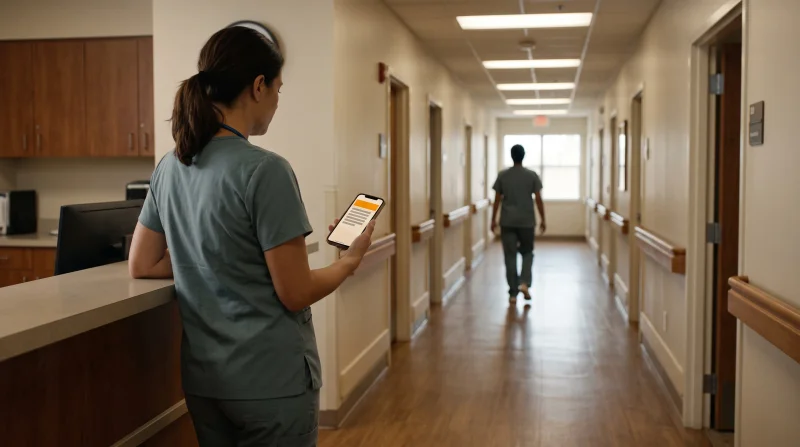
Senior living & post-acute care
On a ratio-bound floor a caregiver leaves for a duty-free meal only when relief arrives — and the record has to show it.
an empty violent incident log in California senior care

Agriculture growers & farm labor contractors
Shears still in hand at row's end, the day's work counted in stacked buckets — the Wage Order 14 hours and the fifth-hour meal still need a record, and the field doesn't write one.
open heat items on harvest crews
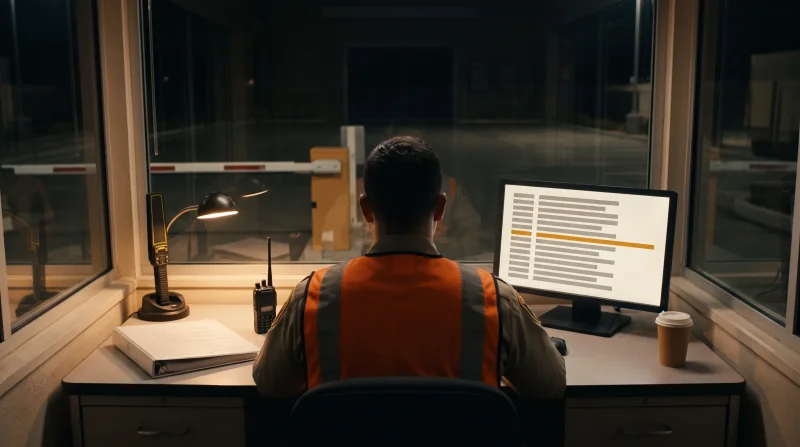
Security guard services
A solo gatehouse post after the fact: the officer's incident report entered into the violent incident log that Labor Code §6401.9 has required since July 2024.
missed breaks on solo posts

Independent grocery stores & markets
A §512 meal period comes due before the end of the fifth hour of a full checkstand shift.
unexplained late meal punches at the checkstand
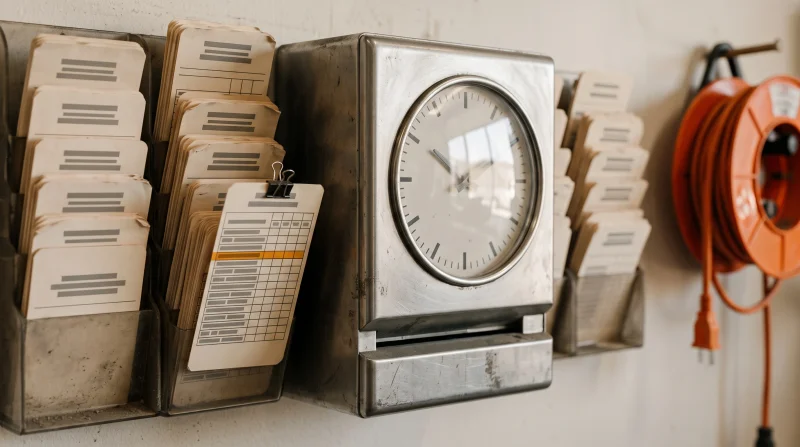
Light manufacturing, non-food
A legacy punch clock and its card rack — the record still rounds to the quarter hour, and rounding meal-period punches is barred.
open heat items on the shop floor

Wholesale distribution & warehouse operations
Mid-wave in the pick aisle: the pallet jack parked for the meal period, beside the written quota description AB 701 requires at larger DCs.
open heat items on the dock
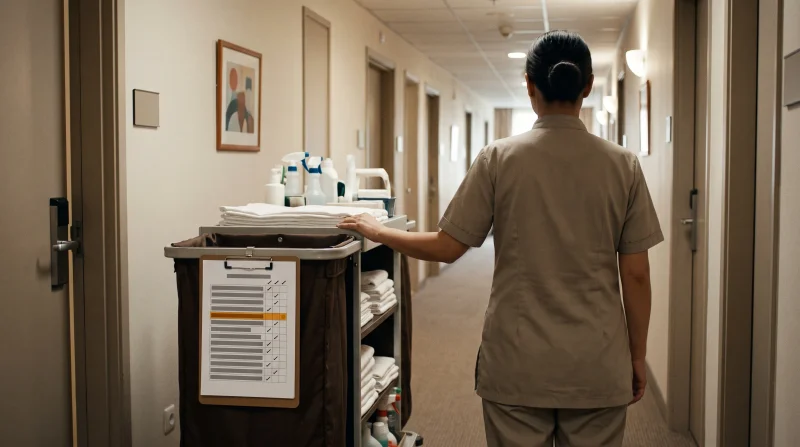
Hotels & lodging
Mid-morning checkout window: The housekeeping board is documented room by room, while the §512 meal period inside that window is the entry the time record has to show.
auto-deducted meals your room attendants never took

Auto repair & dealership service departments
A repair paused mid-job while the technician steps away — the rest period a flag-time job clock has no reason to record, and §226.2 requires to be paid separately from flag hours.
unpaid rest-and-recovery time on flag-hour techs
Ambulatory healthcare
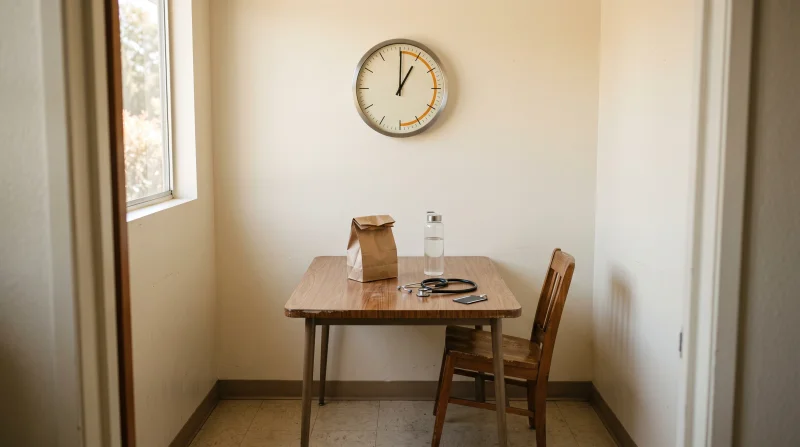
The clinic's timekeeping deducts thirty minutes for the meal period whether or not the break was taken — the time record is silent either way.
auto-deducted clinic lunches nobody took
Private K-12 schools
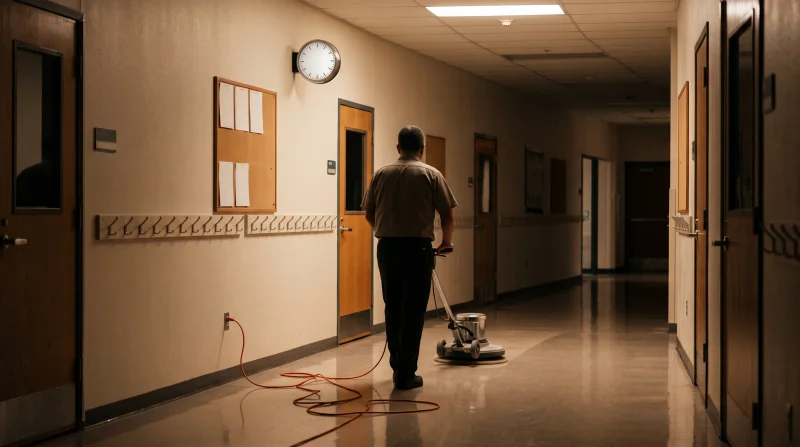
§515.8 exempts teachers, not the custodial staff working the empty building at night — the hourly staff carry the full meal, rest, and time-record machinery, and theirs is the record the campus owes.
missed breaks for classroom aides
Landscaping services
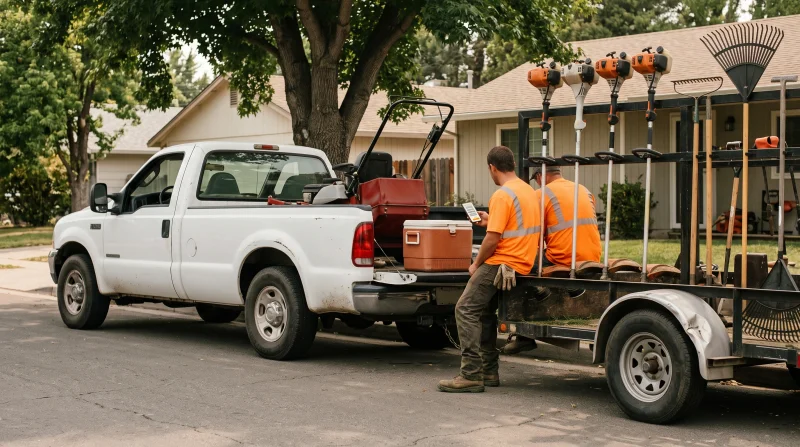
A maintenance crew's meal period between route sites — the interval a job-start clock has no row for, entered as a per-pay-period attestation on the crew member's own phone.
open heat items on landscape crews
Childcare & daycare centers
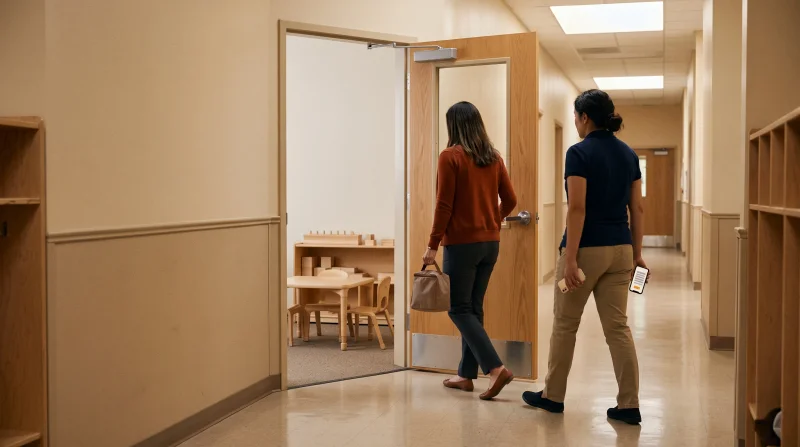
The coverage handoff at the classroom door — a floater takes the room so a duty-free meal break can happen at ratio, drawn before the room fills.
uncovered breaks in ratio-bound classrooms

Logistics & distribution fleets
Dock doors down at shift end: The time clock holds the punches, the per-period attestation adds the crew’s confirmation — and where the two disagree, the exception is reconciled.
shifts where the truck’s GPS disagrees with what the driver signed off
What MicroForensics is
MicroForensics reads the payroll and time clocks you already run, and Floburn operates the loop every pay period.
MicroForensics™ ingests your hourly timecard data, payroll, and related HR documents to flag missed breaks, unpaid break premiums, wage order errors, and open safety items, then chases each one to a documented fix. It is built to work with the existing payroll and timekeeping you already run, and Floburn runs it for you every pay period.
What it does
Five things, every pay period.
- Workers confirm and attest to the accuracy of their hours and breaks, among other labor compliance attestations, via existing tools you have in place that we configure or via custom interfaces we build for you. No one's pay ever depends on it.
- Written rules flag exceptions, such as a missed meal period, a missing rest break, or hours past a limit you set.
- Every flag is answered on the record. The correction is entered next to the original entry.
- When a worker misses breaks repeatedly, they and/or their managers get routed to training.
- Everything goes into one dated record that your designated custodian of records can export to answer a lawyer's letter demanding records from one place.
Why it matters to a California employer
The window for the 15% PAGA cap closes when an employee or their lawyer asks for records, not when the lawsuit does.
The Private Attorneys General Act (Labor Code §2698 et seq.) lets an aggrieved employee — one who personally suffered each of the violations alleged (§2699(c)(1)) — sue for civil penalties on behalf of themselves and other current or former employees affected by the same violations. Penalties run per aggrieved employee, per pay period:
- $100 by default (§2699(f)(2)(A)).
- $200 if a court finds the conduct malicious, fraudulent or oppressive, or if an agency or court found the same practice unlawful in the prior five years (§2699(f)(2)(B)).
- 65% goes to the Labor and Workforce Development Agency and 35% to the employees (§2699(m)). These penalties are separate from any wages and premiums owed.
The 2024 reform (AB 2288 and SB 92) links those penalties to what you can document:
- 15% cap if you took all reasonable steps to comply before receiving the PAGA notice, or before a records request under Labor Code §226, §432 or §1198.5 (§2699(g)(1)). The records request usually comes first.
- 30% cap if you took all reasonable steps within 60 days after the notice (§2699(h)(1)).
- No penalty for a violation you cure (correct it and make each affected employee whole), if you also meet either cap condition. Curing without meeting either condition limits the penalty to $15 per employee per pay period (§2699(j)).
The law rewards finding and fixing violations early, and being able to prove you did. The statute names four examples of reasonable steps (§2699(g)(2)):
- periodic payroll audits with action taken in response
- lawful written policies
- supervisor training on Labor Code and wage order compliance
- corrective action as to supervisors
MicroForensics keeps a dated, exportable record of all four. The audit, policy and training records speak to the cap. Worker sign-offs speak to whether breaks were taken.
The caps are not guaranteed. A court judges whether your steps were reasonable, looking at all the circumstances, including your size and resources. A court may also go above either cap if keeping to it would be unjust, arbitrary and oppressive, or confiscatory (§2699(e)(2)). A violation that happens despite your steps does not, by itself, prove you failed to take them (§2699(g)(2)). Without a record of the steps, there is nothing to show the court. No outcome is guaranteed; every matter turns on its facts.
How we work with you
A free call, a records diagnostic, and then only what you choose.
The call is free. The records diagnostic is a fixed fee, quoted on the call, and its report is yours whatever you decide next. Every paid step after it is written down in a document you sign before it starts.
- 01
Free 30-minute call, by phone or video
The screening pass: one question per exposure area, with you and whoever runs payroll. No records, nothing to prepare. If the records diagnostic is not worth doing for you, we say so.
- 02
Records diagnostic, a fixed fee, quoted on the call
A half- or full-day working session with your records open. Within fourteen calendar days of the working session, a written report: what your records show, item by item; a roadmap sorted into what you can fix yourself, what needs a process change and what needs a lawyer; and a practice records request answered from your own records. We walk you through it, directly or through your lawyer.
- 03
Implementation, only if you choose it, a separate agreement, signed and priced then
Two to four weeks to go-live, on the payroll and timekeeping you already run.
- 04
Ongoing service, every pay period
Floburn runs it: a weekly digest, a monthly report and a quarterly review. Billed monthly per active worker, on an annual term.
- 05
If you leave, at any time
Your record goes with you in a closing export, as structured files your lawyer or a successor vendor can use without us. It is yours throughout, and never held back over money.
Could you find these records today?
- Two weeks of time records exactly as the system exports them, unrounded if the system can do it
- One pay stub for someone who worked a normal week
- Whatever serves as the employee handbook, even if it is three years old
- The written heat illness plan and the injury and illness prevention program, whatever state they are in
Anything you cannot find is itself a finding.
Every alternative produces something. Here is where each one stops short, and what we do after that point.
A handbook signed at hire
Policy, not evidence. It says nothing about any specific pay period, which is where Donohue’s presumption of violation lives.
The payroll app’s clock-out checkbox
Time data, not the employee’s contemporaneous affirmation — and where the checkbox does exist, it captures a signature and stops. It will not chase the exception, pay the premium, retrain the foreman, or close the item.
A PEO
Co-employment leaves wage-and-hour compliance responsibility with you. The PEO relies on the hours you report; the record problem stays yours.
A one-time law-firm audit
A memo that starts decaying the day it’s delivered. It describes one point in time, and nothing keeps the record between audits.
Self-serve compliance software
You configure it, drive crew adoption, and operate it yourself — exactly the job a company without an HR department cannot staff.
EPLI and hope
Wage-and-hour is usually the narrow part of the policy — excluded outright, or sublimited to defense costs. Read your own wage-and-hour endorsement before assuming otherwise; we make no claim about what your policy covers. We are also not aware of any published California EPLI or workers’ comp credit for running a documented compliance program, so don’t buy this expecting a premium reduction. Insurance is, at best, money after the fact.
What you are buying is that every flagged missed break, unpaid premium and open safety item is chased to a documented fix. The record is what that leaves behind.
Whatever payroll and time clocks you already run, MicroForensics is built on top of them.
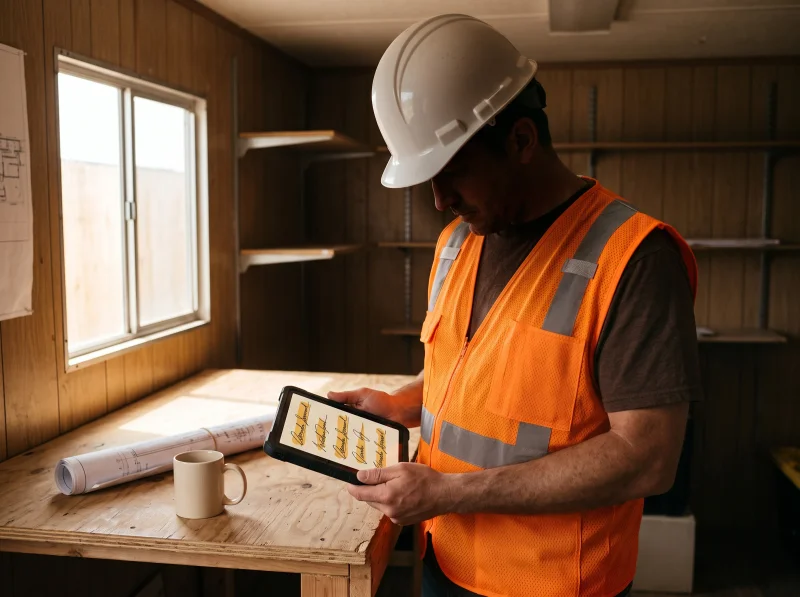
There is no MicroForensics app for your crews to learn and no migration to sit through. Each worker’s dated sign-off on hours and breaks, the attestation, is routed on top of the timekeeping and payroll you have, on a cadence of its own that is never a condition of anyone being paid. Floburn’s engineers build and operate MicroForensics for you. Below are configurations we have built, and what each one does.
No California appellate court has yet said what satisfies “all reasonable steps,” and a record does not decide how a matter comes out. What the records diagnostic measures, on your data, is how many pay periods, employees and shift exceptions the record has to cover.
- Stack
BusyBusy time tracking + Gusto payroll (migrated from QuickBooks)
A Nevada-based commercial construction firm working California job sites
What runs on it. Exports from BusyBusy fed a DocuSign attestation routed to every hourly employee — capturing explicit acknowledgments on overtime, missed breaks, and other compliance signals. It ran on a bi-weekly cadence of its own, decoupled from the payroll run; the sign-off was never a condition of being paid.
- Stack
Gusto (timekeeping + payroll)
A Salinas Valley winery with a large direct-to-consumer business
What runs on it. Same bi-weekly DocuSign attestation flow, this time fed by Gusto’s native timekeeping. Cleaner data in, same defensible record out.
- Stack
QuickBooks → Gusto + a custom AI application
A home staging business in the greater Sacramento area
What runs on it. A purpose-built AI application that routes per-cycle compliance and time-keeping questionnaires to every employee — with far greater granularity than the DocuSign approach. The owner sees each cycle’s exceptions and closes each one on the record.
Identifying details anonymized at each client’s preference. Direct references available on request, under NDA.
- ADP Workforce Now
- Paylocity
- UKG
- Gusto
- BusyBusy
- ExakTime
- Samsara
- Motive
- Geotab
- QuickBooks Time
- Deputy
- Rippling
- Paychex
- Justworks
We build the connector for your stack — by API where one exists, by export, SFTP, or structured manual entry where one doesn’t — scoped and priced in the records diagnostic.

- 01
AI assistance, narrowly bounded.
We use AI where it earns its keep — defense narrative drafting, anomaly detection, employee Q&A, weekly digests for owners. We do not use AI to fire attestations, modify the audit trail, or generate legal opinions. Every AI action is logged with prompt, input, and output, so any finding can be reconstructed and explained.
- 02
Paper works too.
Some deployments automate end-to-end; some still hand out paper sign-offs to crews without phones. Both flow into the same audit trail.
- 03
We operate it. You don’t maintain it.
Floburn keeps the rules and sign-off prompts configured for you, updates the attorney-reviewed rules library as California labor law changes, and produces the reports your CFO and lawyer actually use.
Records California already requires
California already requires three of the records MicroForensics keeps: your time records, your training file, and your violent incident log (SB 553). The law requires each of them whether or not anyone helps you keep them, so keeping them properly costs nothing you were not already required to spend. For the hazard log, 8 CCR 3203(b)(1) asks for the unsafe condition and the action taken to correct it, in the same entry.
Built for small and mid-sized California employers with hourly field and shift crews, across fifteen California industries.
The PAGA penalty cap
The 2024 reform ties PAGA penalties to what you can document. The court decides whether your steps were enough.
The cap, and what a court decides→None of the California employers we’ve audited were trying to cheat. All of them had gaps.
- 01
Attestation lives at hire, not per pay cycle.
The ‘I waived my break voluntarily’ acknowledgment is signed on the first day of employment and never refreshed.
- 02
Timesheet corrections leave no defensible audit trail.
Hours get adjusted — sometimes legitimately, sometimes by a manager — without a structured record of who changed what, when, and why the employee agreed.
- 03
Time-tracking, HR, and payroll don’t talk.
When a lawyer’s letter demanding records arrives, no one can produce a single queryable record of what each employee was paid and what they signed off on.
- 04
Communication is verbal, not signed.
Foremen and dispatchers tell crews about meal-break rules; the system captures none of it.
- 05
Violations get caught after payroll runs, not before.
By the time anyone reviews the cycle, the historical record is locked.
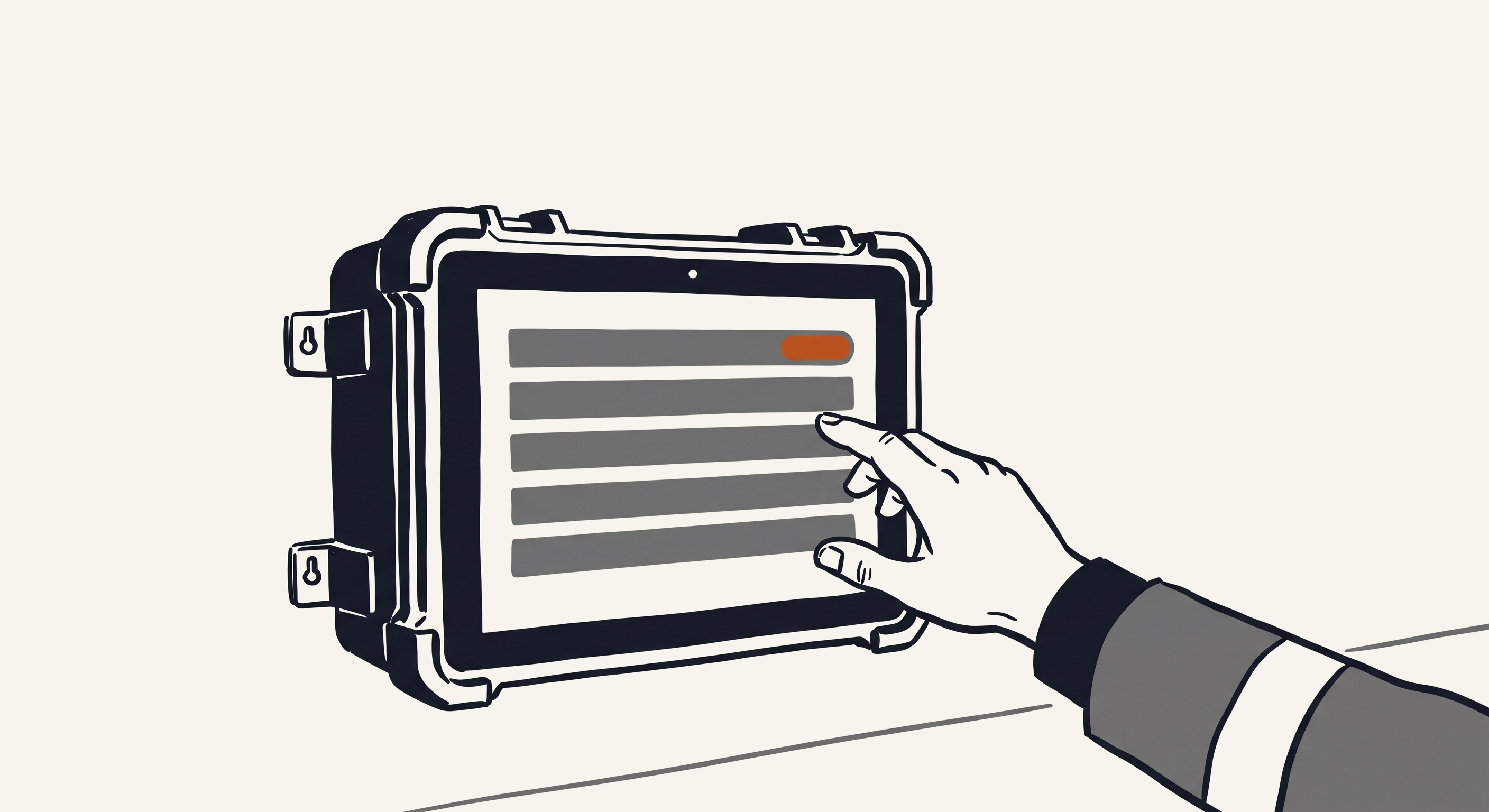
What each part of MicroForensics does, and what it records.
MicroForensics reads your existing time, payroll and HR systems and keeps one dated record from them, every pay period, in English and, where your crews need it, Spanish, on the phones your crews already carry. Payroll, timekeeping, HR, and the safety records that same crew-facing sign-off carries are reconciled into that one record, so producing it is an export from one place rather than a search across several. Built for foremen, drivers, and warehouse crews.
01The worker sign-off, on a cadence you choose
Per-shift, end-of-day, end-of-week, or per pay cycle — whichever fits the operation. Captures meal and rest break compliance, hours accuracy, and pay-match in the employee’s own words. The same crew-facing surface carries the other records California already compels: the IIPP hazard and correction record (8 CCR 3203), the SB 553 violent incident log (Lab. Code §6401.9), §3395 outdoor and §3396 indoor heat training documentation, and the FEHA policy acknowledgment and harassment-prevention training records (2 CCR §§ 11023, 11024(b)(2)). Different statutes, different remedies, no shared mechanism — but the employer owes every one of them anyway, so there is no lawful posture in which they do not exist. Spanish where the workforce needs it, scoped in the records diagnostic.
02Each flag worked to a close, under the attorney-reviewed protocol
Each pay period, every flag — from your time and payroll records and from the sign-off — is worked with your team under the attorney-reviewed protocol: what to do, in what order, and what to enter on the record. A missed or short break is caught the pay period it happens, and nothing closes without a dated entry. The point is to close the item, not to count it. The statute names corrective action among its examples; nothing names detection.
03Adaptive courses when the same miss repeats
When the same employee misses three breaks in two weeks, they get a short, role-relevant course — not blanket annual training the whole crew sat through. The supervisor who kept signing off on it gets routed too: Supervisor training and corrective action as to supervisors are two of the four examples of reasonable steps Labor Code §2699(g)(2) names. Both courses run in English or, where the crew needs it, Spanish, and completion lands on the audit trail with a timestamp.
04The record, kept so any change leaves a trace
Entries are recorded every pay period — timestamped, signature-captured, tamper-evident — not assembled after a claim lands. A correction is entered beside the item it corrects rather than over it, so the original entry and the fix both stay readable. Structured, queryable, and built in evidentiary format from the first pay period rather than reformatted later.
05What your custodian of records produces when a lawyer’s letter arrives
The record is held by your own authorized custodian of records, not by us, so producing it is an export rather than an assembly job. One production package is the records export your authorized custodian of records produces to answer a lawyer’s letter demanding records. When that letter arrives — a request under section 226, 432, or 1198.5 — or a §2699 PAGA notice after it, that custodian of records — never Floburn — produces one production package in hours, not weeks, and authenticates it as the person who has held it all along. The timeline is a property of how the record is kept, not a promise about your matter. No outcome is guaranteed; every matter turns on its facts. If the engagement ends, the closing export is part of offboarding: Floburn operates the loop, your company owns the record.
When a lawyer’s letter demands records
Your custodian of records answers the letter with one production package: the records export they produce. The package exists before the letter does.
How your custodian of records produces the package→Two field notes.
Field note: the PAGA notice that arrived on a Friday.
Four days of a 33-day clock disappeared between Friday afternoon and Tuesday morning. A short note on the operational shape of receiving a PAGA notice the wrong way.
Read the post→Field note: the foreman who refused the tablet.
Construction-tech adoption friction is almost never resistance to change. It's a tool that destroyed a working trust ritual nobody on the vendor side noticed.
Read the post→Questions worth answering before a call.
01What is the 15% PAGA penalty cap?
Labor Code §2699(g) caps PAGA civil penalties at 15% where the employer took all reasonable steps before notice — or before an employee’s personnel or payroll records request, which often comes first; §2699(h) caps them at 30% for remediation within 60 days after. Two qualifications matter. Whether the steps were enough is the court’s call, on the totality of the circumstances. And the percentages are ceilings, not floors: §2699(e)(2) lets a court award more, “notwithstanding the limitations set forth in subdivisions (g) and (h).” The cap reaches Labor Code civil penalties only, it is conditional on evidence rather than policies, and no record means no cap.
02What counts as “reasonable steps” under amended §2699?
§2699(g)(2) names four examples: periodic payroll audits with action taken in response, lawful written policies disseminated to employees, supervisor training on Labor Code and wage order compliance, and corrective action as to supervisors. Reasonableness is judged “on the totality of the circumstances, taking into account the size and resources available to the employer.” Each item must be shown — with timestamps, signatures, and a chain of custody that survives discovery — and we produce a dated, exportable record of all four. The same subdivision adds the part employers rarely hear: “the existence of a violation, despite the steps taken, is insufficient to establish that an employer failed to take all reasonable steps.” Being imperfect does not forfeit the argument. Policies that exist only in a handbook, with nothing showing they were distributed or followed, are what forfeits it. No California appellate court has yet said what satisfies “all reasonable steps.”
03What do AB 2288 and SB 92 actually require employers to document?
As amended by the 2024 reforms, §2699(g)(2) names four examples of “all reasonable steps”: periodic payroll audits with action taken in response, lawful written policies disseminated to employees, supervisor training on Labor Code and wage order compliance, and corrective action as to supervisors. LWDA proposed its first PAGA regulations in February 2026; they are procedural — notice content, filer conduct, settlement review — and do not interpret the reasonable-steps standard. They are proposed, not final, and nothing on this page assumes they take effect. Reasonable steps are shown by evidence, not assertion — a record tied to specific employees, dates, and times.
04We already run BusyBusy or ExakTime. Isn’t that the record?
It is the time data — clock-in, clock-out, GPS, geofencing — which is the input, not the record. Several timekeeping products can capture a signature at clock-out, and the box is sometimes configured long before anyone asks who acts on what it surfaces. Your system may have a sign-off box; what matters is whether anyone acts on what it surfaces. An app can capture a signature, but it will not chase the exception, pay the premium, retrain the foreman, or close the item. What the sign-off adds is evidence about whether breaks actually happened: the employee’s own contemporaneous affirmation or dispute that breaks were taken, hours are accurate, and pay matches expectation. The correction is then entered alongside anything that came back wrong. MicroForensics is built on top of the time clock you already run — it ingests the time data, routes per-pay-period attestations, and runs the correction to close.
05We use ADP, Paylocity, or UKG for payroll. Do we have to migrate to use MicroForensics?
No. MicroForensics sits above your existing HRIS, timekeeping, and payroll systems. We build the connector for your stack — by API where one exists, by export, SFTP, or structured manual entry where one doesn’t — scoped and priced in the records diagnostic. The systems we build on are listed under “What it runs on”. You keep your payroll and time clocks; MicroForensics reads from them.
06Does MicroForensics help with harassment or discrimination claims?
Two different answers, and the difference is worth being plain about. On harassment: California employers are strictly liable for harassment by a supervisor — no record and no service changes that — and Gov. Code §12950.1(c) says training compliance “does not insulate the employer from liability for sexual harassment.” What the law does compel is a record: the FEHA policy acknowledgment and the harassment-prevention training records (2 CCR §§ 11023, 11024(b)(2)). The crew-facing surface carries both, dated and tracked to completion, because the employer owes them anyway. One textual point your lawyer may find useful: Gov. Code §12940(k) requires “all reasonable steps” to prevent harassment — the same words amended §2699(g) uses on the wage-and-hour side — so one record architecture answers both statutes’ phrasing. That is evidence and posture, not a statutory penalty mechanism. On discrimination: no. No California statute rewards documentation there the way §2699 does for wage-and-hour civil penalties — liability turns on the adverse decision itself, not on notice — so we make no claim on discrimination, and we would be skeptical of a vendor who does.
07What is the difference between a one-time hire-day waiver and a per-pay-period meal break attestation?
A waiver signed at hire establishes that the employee was informed of the meal-break rule. It does not establish that any particular break on any particular day was taken or knowingly waived. Donohue v. AMN Services (Cal. 2021) held that noncompliant time records create a rebuttable presumption of violation. The California Supreme Court described an employer system of the same per-period design and said that, without the rounding, it “would have ensured accurate tracking of meal period violations” — so we don’t round. Attestation prompts fire on unrounded punch times: Where a customer’s timekeeping rounds punches, deployment turns the rounding off, and where unrounded punches can’t be supplied, we say so rather than prompt off rounded data. Be clear about what that is and isn’t: No court has ever held that an employee attestation rebuts the Donohue presumption, and Donohue itself left sufficiency for remand. The hire-day signature is policy. The contemporaneous attestation is dated evidence your lawyer can argue from. Neither is a ruling.
08What happens to our record if Floburn stops operating it?
You keep it — that is a design decision, not a courtesy. The record is built in evidentiary format from the first pay period, your authorized custodian of records holds the standing export, and the exports are structured, queryable files your lawyer or a successor vendor can use without us. Floburn operates the loop; your company owns the record. If the engagement ends, the closing export is part of offboarding, and nothing about the record’s usability depends on Floburn continuing to exist.
09A PAGA notice just landed. What does MicroForensics do for us now?
If all reasonable steps were taken and documented before the notice, §2699(g) caps civil penalties at 15% — applied by the court on a totality-of-the-circumstances showing, and subject to §2699(e)(2), which lets a court exceed the limits. If documentation is incomplete, §2699(h) caps penalties at 30% for remediation within 60 days after. MicroForensics can be implemented inside that 60-day window. Separate pathways exist by headcount: Employers with 100 or more employees can request a court-supervised early evaluation conference; employers under 100 can propose a cure — correcting the violation and making each affected employee whole — on a confidential LWDA path with its own short clock. Which pathway applies to you, whether you qualify, what to cure, and what your exposure is are legal conclusions on your facts. Your lawyer makes those calls; we build the material they argue from, and the earlier we start the more of it there is.
After the call
A fixed fee, a written report within fourteen calendar days of the working session, and a finding-by-finding answer: Which of the records a lawyer’s letter could demand do you actually hold?
What the records diagnostic finds→For defense counsel
We build the record. You make the argument.
Working through your engagement→Free 30-minute call.
Tell us about your timekeeping and payroll setup, your headcount, and what’s prompting the call. We tell you whether the records diagnostic makes sense for you and what it costs, whether to run it directly with Floburn or through your lawyer, and what to expect if you proceed. Nothing is signed on the call. If we are not the right fit, we say so.
Floburn Inc. is not a law firm and does not provide legal advice. We build the record; your counsel makes the argument. Counsel advises Floburn on system design and does not represent your company; retain your own counsel for advice specific to your situation.