How MicroForensics works.
MicroForensics™ ingests your hourly timecard data, payroll, and related HR documents to flag missed breaks, unpaid break premiums, wage order errors, and open safety items, then chases each one to a documented fix. It is built to work with the existing payroll and timekeeping you already run, and it runs the loop for you every pay period.
By phone or video. We tell you whether the records diagnostic, a fixed-fee review of your timecard, break and safety records, is worth doing for you, and what it costs. If it is not, we say so.
What it does
Five things, every pay period.
- Workers confirm and attest to the accuracy of their hours and breaks, among other labor compliance attestations, via existing tools you have in place that we configure or via custom interfaces we build for you. No one's pay ever depends on it.
- Written rules flag exceptions, such as a missed meal period, a missing rest break, or hours past a limit you set.
- Every flag is answered on the record. The correction is entered next to the original entry.
- When a worker misses breaks repeatedly, they and/or their managers get routed to training.
- Everything goes into one dated record that your designated custodian of records can export to answer a lawyer's letter demanding records from one place.
How the record is run

- 01
AI assistance, narrowly bounded.
We use AI where it earns its keep — defense narrative drafting, anomaly detection, employee Q&A, weekly digests for owners. We do not use AI to fire attestations, modify the audit trail, or generate legal opinions. Every AI action is logged with prompt, input, and output, so any finding can be reconstructed and explained.
- 02
A link each pay period.
Each pay period, your crew gets a link by text, email, or chat message, and tapping it opens a short sign-off. A worker without a smartphone can sign off by replying to the text. Nothing to download, and every sign-off lands in the same audit trail.
- 03
MicroForensics runs it. You don’t maintain it.
MicroForensics keeps the rules and sign-off prompts configured for you, updates the attorney-reviewed rules library as California labor law changes, and produces the reports your CFO and lawyer actually use.
None of the California employers we’ve audited were trying to cheat. All of them had gaps.
- 01
Attestation lives at hire, not per pay cycle.
The ‘I waived my break voluntarily’ acknowledgment is signed on the first day of employment and never refreshed.
- 02
Timesheet corrections leave no defensible audit trail.
Hours get adjusted — sometimes legitimately, sometimes by a manager — without a structured record of who changed what, when, and why the employee agreed.
- 03
Time-tracking, HR, and payroll don’t talk.
When a lawyer’s letter demanding records arrives, no one can produce a single queryable record of what each employee was paid and what they signed off on.
- 04
Communication is verbal, not signed.
Foremen and dispatchers tell crews about meal-break rules; the system captures none of it.
- 05
Violations get caught after payroll runs, not before.
By the time anyone reviews the cycle, the historical record is locked.
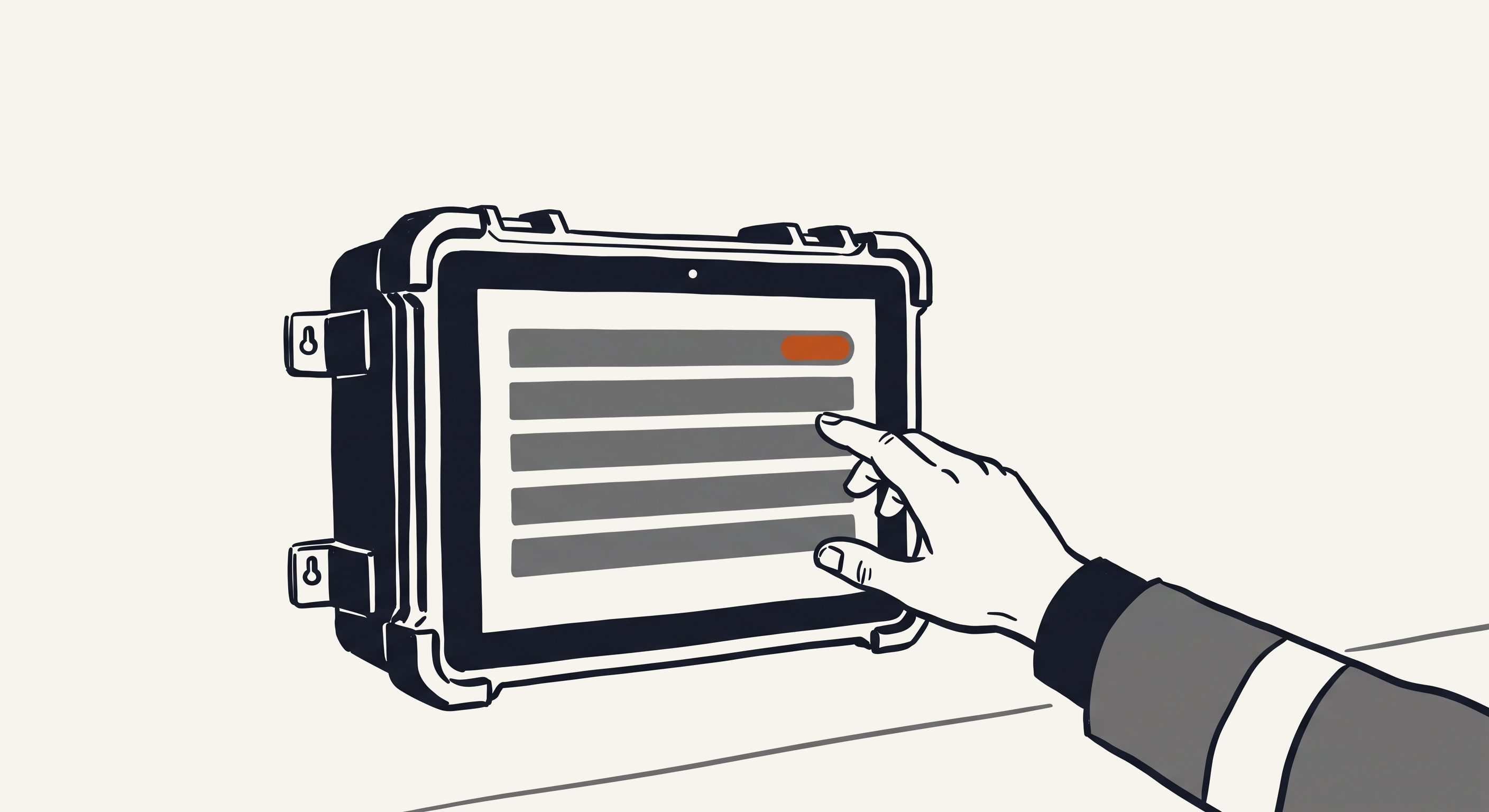
What each part of MicroForensics does, and what it records.
MicroForensics reads your existing time, payroll and HR systems and keeps one dated record from them, every pay period, in English and, where your crews need it, Spanish, on the phones your crews already carry. Payroll, timekeeping, HR, and the safety records that same crew-facing sign-off carries are reconciled into that one record, so producing it is an export from one place rather than a search across several. Built for foremen, drivers, and warehouse crews.
01The worker sign-off, on a cadence you choose
Per-shift, end-of-day, end-of-week, or per pay cycle — whichever fits the operation. Captures meal and rest break compliance, hours accuracy, and pay-match in the employee’s own words. The same crew-facing surface carries the other records California already compels: the IIPP hazard and correction record (8 CCR 3203), the SB 553 violent incident log (Lab. Code §6401.9), §3395 outdoor and §3396 indoor heat training documentation, and the FEHA policy acknowledgment and harassment-prevention training records (2 CCR §§ 11023, 11024(b)(2)). Different statutes, different remedies, no shared mechanism — but the employer owes every one of them anyway, so there is no lawful posture in which they do not exist. Spanish where the workforce needs it, scoped in the records diagnostic.
02Each flag worked to a close, under the attorney-reviewed protocol
Each pay period, every flag — from your time and payroll records and from the sign-off — is worked with your team under the attorney-reviewed protocol: what to do, in what order, and what to enter on the record. A missed or short break is caught the pay period it happens, and nothing closes without a dated entry. The point is to close the item, not to count it. The statute names corrective action among its examples; nothing names detection.
03Adaptive courses when the same miss repeats
When the same employee misses three breaks in two weeks, they get a short, role-relevant course — not blanket annual training the whole crew sat through. The supervisor who kept signing off on it gets routed too: Supervisor training and corrective action as to supervisors are two of the four examples of reasonable steps Labor Code §2699(g)(2) names. Both courses run in English or, where the crew needs it, Spanish, and completion lands on the audit trail with a timestamp.
04The record, kept so any change leaves a trace
Entries are recorded every pay period — timestamped, signature-captured, tamper-evident — not assembled after a claim lands. A correction is entered beside the item it corrects rather than over it, so the original entry and the fix both stay readable. Structured, queryable, and built in evidentiary format from the first pay period rather than reformatted later.
05What your custodian of records produces when a lawyer’s letter arrives
The record is held by your own authorized custodian of records, not by us, so producing it is an export rather than an assembly job. One Response Bundle is the records export your authorized custodian of records produces to answer a lawyer’s letter demanding records. When that letter arrives — a request under section 226, 432, or 1198.5 — or a §2699 PAGA notice after it, that custodian of records — never Floburn — produces one Response Bundle in hours, not weeks, and authenticates it as the person who has held it all along. The timeline is a property of how the record is kept, not a promise about your matter. No outcome is guaranteed; every matter turns on its facts. If the engagement ends, the closing export is part of offboarding: MicroForensics runs the loop, your company owns the record.
By phone or video. We tell you whether the records diagnostic, a fixed-fee review of your timecard, break and safety records, is worth doing for you, and what it costs. If it is not, we say so.
Every alternative produces something. Here is where each one stops short, and what we do after that point.
A handbook signed at hire
Policy, not evidence. It says nothing about any specific pay period, which is where Donohue’s presumption of violation lives.
The payroll app’s clock-out checkbox
The worker’s answer about one shift, and in some systems the premium added. Who works each flag after that, and where the fix gets written down, is a separate job.
A PEO
Keep your PEO. Keep your payroll. The records diagnostic looks at the records behind them.
A one-time law-firm audit
It describes one point in time. Between reviews, MicroForensics keeps the record every pay period.
Self-serve compliance software
You configure it, drive crew adoption, and operate it yourself — exactly the job a company without an HR department cannot staff.
An EPLI policy
Employment practices liability insurance (EPLI) is typically not built for wage-and-hour claims. Many policies exclude them; some pay defense costs only, up to a sublimit. What your policy covers is your broker’s question: ask to see the wage-and-hour language in your policy, not the summary. We are also not aware of any published California EPLI or workers’ comp credit for running a documented compliance program, so don’t buy this expecting a premium reduction.
What you are buying is that every flagged missed break, unpaid premium and open safety item is chased to a documented fix. The record is what that leaves behind.
A brief call.
Tell us about your timekeeping and payroll setup, your headcount, and what’s prompting the call. We tell you whether the records diagnostic makes sense for you and what it costs, whether to run it directly with Floburn or through your lawyer, and what to expect if you proceed. Nothing is signed on the call. If we are not the right fit, we say so.
Floburn Inc. is not a law firm and does not provide legal advice. We build the record; your counsel makes the argument. Counsel advises Floburn on system design and does not represent your company; retain your own counsel for advice specific to your situation.